
Podcast for Homeowners Preparing to Renovate

Top 5%
RANKED PODCAST
LISTEN ON APPLE PODCAST

LISTEN ON SPOTIFY

05: Scrolling Pinterest for Your Kitchen Remodel? Cause for Overwhelm, or a Practical Tool?
Why Your Design Style Doesn’t Fit in a Box (and How to Create a Home That Actually Feels Like You)
One of the biggest myths I see in remodeling is the idea that you need to define your design style before you can move forward.
Modern farmhouse.
Mid-century modern.
Coastal.
Traditional.
Transitional.
We’re told to pick one — as if your entire personality, lifestyle, and home can be summed up in a single label.
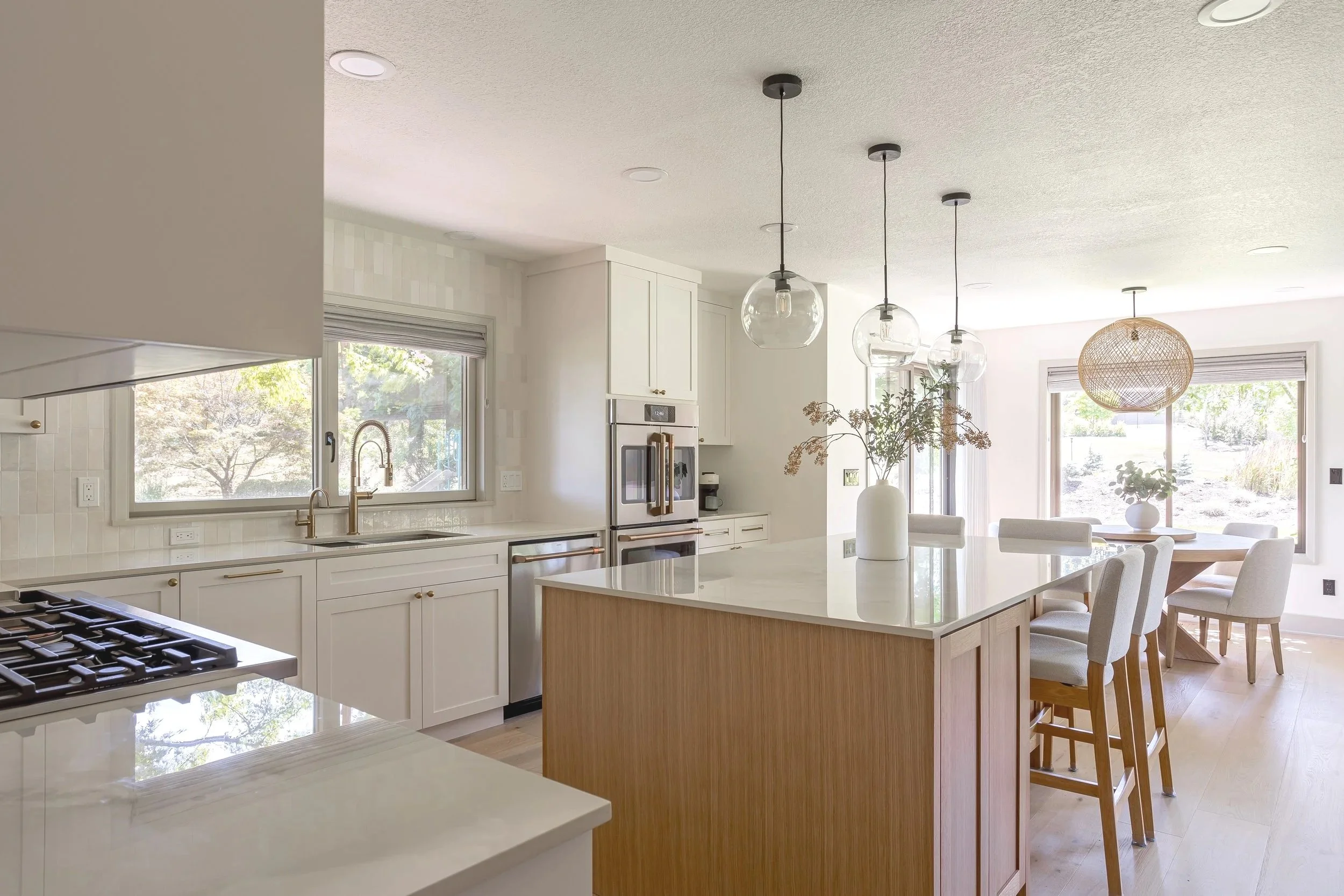
But here’s the thing: most people don’t actually live in one design style. And trying to force yourself into a box is often what creates confusion, second-guessing, and regret later on.
In this episode of Preparing for Your Home Remodel, I want to help you rethink how you approach design — especially if visualizing your finished space doesn’t come naturally to you.
You’re Not “Bad at Design” — Your Brain Just Works Differently
Design is my heartbeat. I love it. But I also know that for many homeowners, design feels intimidating.
Some people can look at tile, grout, countertops, cabinetry, and lighting and instantly visualize how it will all come together. They can see the finished kitchen before anything has even been removed.
Others can’t visualize it at all.
And if that’s you, I want you to hear this clearly:
That does not mean you’re a lost cause. It doesn’t mean you’re destined to make bad decisions or that you automatically need to hire a designer.
It just means your brain works differently — and you need tools that help you see the end result instead of imagining it in your head.
That’s what this episode is really about: practical ways to build clarity and confidence around your design before renovation begins.
Need Help With Your Remodel?

Book Your 1 hour Design Consultation
Your Customized Plan So You Can Renovate With Clarity and Confidence
Why Design Styles Can Actually Hold You Back
A lot of homeowners start by taking design style quizzes or searching Pinterest using style labels.
And while those labels can be helpful shorthand, they can also become limiting.
You might love:
The warmth of traditional design
The simplicity of modern spaces
The textures of organic or coastal interiors
So when you search only within one “style,” you end up missing elements you’re naturally drawn to.
That’s why I always say: you might be a combination of three styles — and that is your style.
Trying to force yourself into one category often leads to frustration because you’re editing out pieces of yourself instead of designing a home that reflects how you actually live.
Using Pinterest the Right Way (Without Overwhelm)
Yes — Pinterest is a great place to start. But how you use it matters.
Pinterest is your vision caster, not your final design plan.
What I see when clients send me boards is fascinating:
Some boards are incredibly cohesive — same colors, same vibe, same feel throughout
Others are all over the place — completely different kitchens, finishes, layouts, lighting
Neither is wrong.
What matters is how you’re pinning.
Some people pin entire images because they love the overall feeling.
Others pin images because they love one specific element — a light fixture, an island shape, a cabinet detail.
The problem happens when all of that ends up on one board with no clarity around why things were pinned.
That’s where overwhelm sets in.
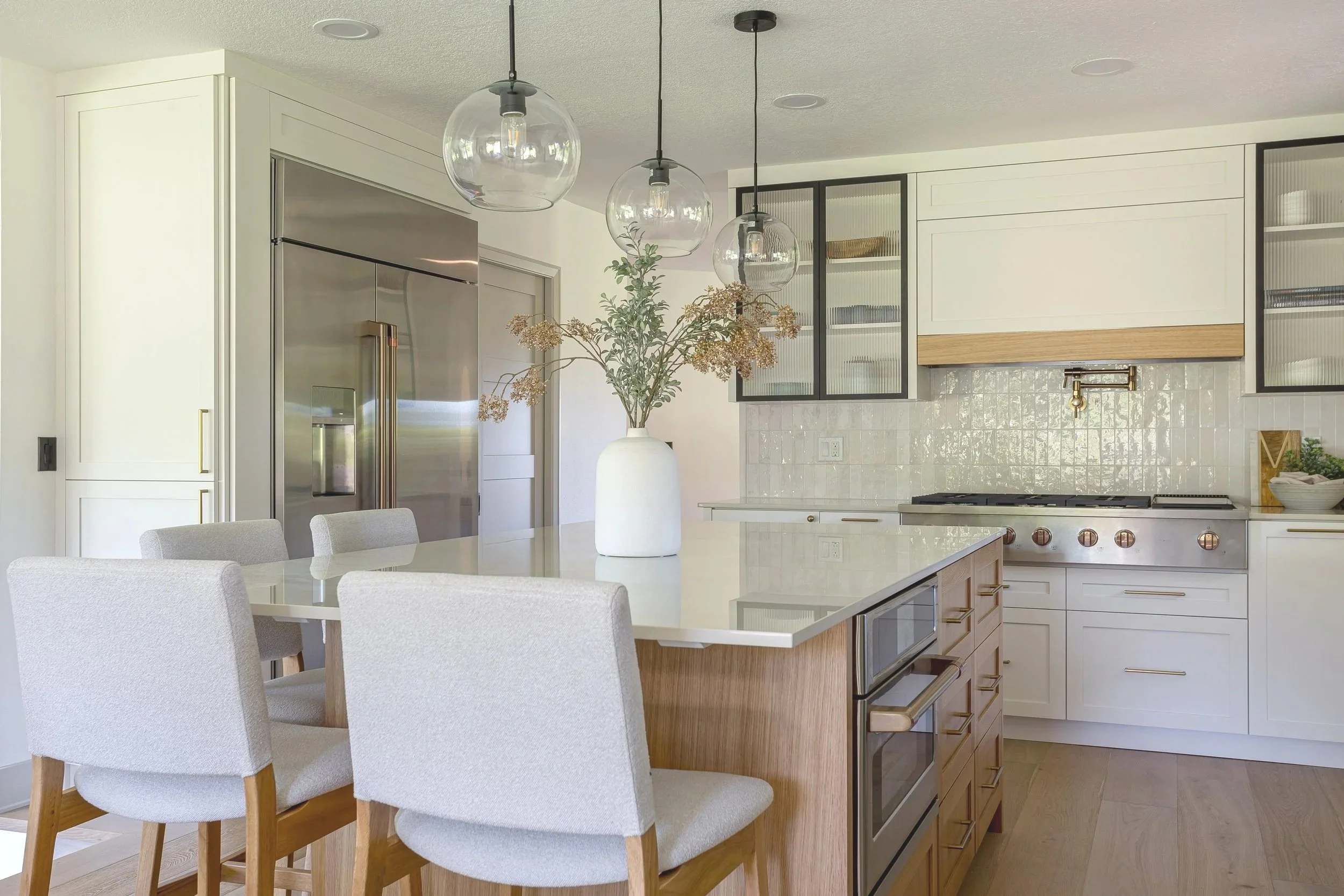
The Pinterest Board System That Creates Clarity
Instead of one massive board, I recommend creating separate boards with separate purposes.
For example:
One board for overall feeling and aesthetic
One board just for lighting
One board for kitchen layouts
One board for hardware or finishes
The “feeling” board is the most important. This board isn’t about exact selections — it’s about how you want to feel when you walk into your kitchen.
Warm? Calm? Bright? Moody? Inviting?
That feeling becomes your anchor.
Once you have that anchor, you can explore specific elements without veering off course.
Turning Inspiration Into a Real Design Plan
After you’ve created your boards, the next step is pulling everything into one place so you can see how it works together.
This is where tools like Canva, PowerPoint, or Google Slides come in.
I recommend taking:
One to three images from your “feeling” board
Adding selections as you make them (lighting, tile, hardware, counters)
This becomes your concept board.
Why this matters so much is because it prevents decision fatigue.
Instead of endlessly scrolling and second-guessing, you can always come back to one question:
Does this choice support the feeling I decided on from the beginning?
If the answer is yes — move forward.
If the answer is no — let it go.
LISTEN ON APPLE PODCAST

LISTEN ON SPOTIFY
How to Spot Patterns in What You Love
Once everything is pulled together, start asking yourself:
What colors keep showing up?
Are finishes mostly matte or polished?
Am I drawn to bold patterns or simple ones?
Do I keep pinning black hardware? Brass? Mixed metals?
These patterns tell you far more about your design style than any quiz ever could.
They also make future decisions easier. Instead of starting from scratch each time, you already know what lane you’re in.
A Note on Trends (and Resale)
Design trends will always exist.
And here’s my philosophy:
If you love a trend — do it
If you hate a trend — don’t force it
If you truly love something, you won’t get sick of it just because it goes “out of style.”
If you’re designing your forever home, this matters even more.
If resale is on the horizon, you can still design thoughtfully without chasing trends you don’t connect with.
At the end of the day, resale value is less about trends and more about whether a home feels updated, cohesive, and livable.
Design Is a Process — Not a Test You Can Fail
You don’t need to label your style.
You don’t need to get it perfect on the first try.
You just need a process that supports how you think.
When you create an anchor, notice patterns, and give yourself permission to blend styles, design becomes clearer — and a lot less stressful.
That’s what this episode of Preparing for Your Home Remodel is meant to help you do.
🎧 Listen to the full episode to learn how to use Pinterest intentionally, visualize your design, and create a clear plan before renovation begins.
Next Episode
LISTEN ON APPLE PODCAST
LISTEN ON SPOTIFY