
Podcast for Homeowners Preparing to Renovate

Top 5%
RANKED PODCAST
LISTEN ON APPLE PODCAST

LISTEN ON SPOTIFY

06: Can’t Visualize a Room? Where to Start On Your Kitchen Design to Avoid Decision Fatigue
You Have Inspiration — Now What? How to Turn Pinterest Ideas Into a Real Design Plan
If you listened to the last episode, you’ve already done the hard part — you stopped the Pinterest death scroll and actually used it in a way that gave you clarity.
You created boards with intention.
You identified the feeling you want your space to have.
You found your “North Star” for your project.
And then the next question inevitably shows up:
Okay… now what?
This is where a lot of homeowners get stuck. You know what you like, but the thought of pulling it all together — layout, materials, fixtures, decisions — feels overwhelming.
So in this episode of Preparing for Your Home Remodel, I walk you through the next steps after Pinterest and explain how to move from inspiration to a real, workable design plan without burning yourself out.
Why Layout and Function Come Before “The Pretty Stuff”
Once you have your aesthetic direction, it’s very tempting to jump straight into light fixtures, tile, and finishes. I get it — that’s the fun part.
But here’s the truth:
Layout and function are the foundation of everything else.
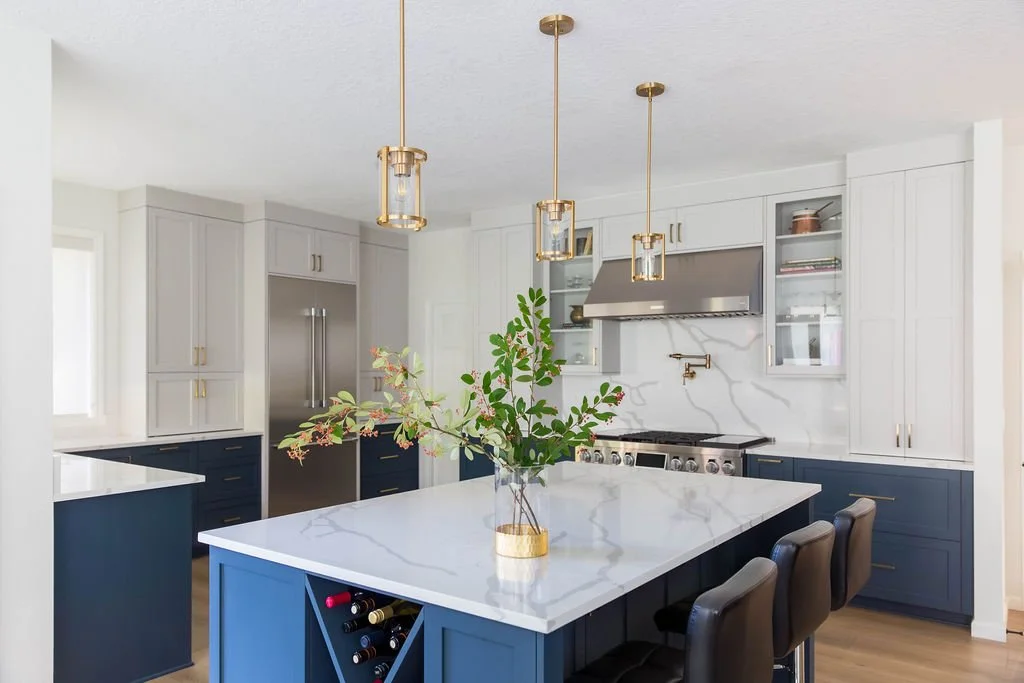
You can’t choose the right pendant lights if you don’t know how big your island is.
You can’t finalize cabinetry hardware if you don’t know where drawers and doors are landing.
And you definitely don’t want to make a bunch of selections only to realize later they no longer work because the layout changed.
That’s how decision fatigue happens.
So before making a single selection, I always go to layout and function first — especially in a kitchen remodel.
Need Help With Your Remodel?

Book Your 1 hour Design Consultation
Your Customized Plan So You Can Renovate With Clarity and Confidence
Starting With Cabinetry and Appliances
In most kitchens, cabinetry is where everything begins.
If you’re changing the layout at all, you need to think about:
Where appliances will live
How much clearance each appliance needs
How doors open
How the kitchen will function day to day
Every appliance has a specification sheet, and those specs matter more than most people realize. I’ve designed kitchens, then gone back to check specs and realized something wouldn’t open properly or needed more space. It happens — which is why checking this early matters.
If this feels overwhelming, you have options:
Work directly with a cabinet designer (custom cabinet companies do this all day)
Or, if you want to experiment on your own, use SketchUp
SketchUp has a free version, it’s customizable, and you can save your work. There are endless YouTube tutorials, and you can download standard cabinet sizes directly into your model to move things around and test layouts.
Designing for Function (Not Just Looks)
Layout isn’t just about where cabinets go — it’s about how your kitchen works for you.
This is where you think about:
Trash pullouts
Spice drawers
Utensil storage
Knife drawers
Pantry systems
All of these “extras” have size requirements that impact your cabinet layout. A great resource for this is Rev-A-Shelf, which shows exactly what size cabinet is required for each insert.
And even if you’re not changing your layout, I always encourage homeowners to at least consider it. If you’re already investing a significant amount of money and your kitchen still frustrates you afterward, that’s a hard pill to swallow.
Function should always come first.
Once Layout Is Set, Then You Move to Selections
Once your layout and cabinetry are finalized, now you get to do the fun part — selections.
This is where I recommend starting with the focal point of the kitchen.
Ask yourself:
What do I want to be the star of this space?
What do my eyes go to in my Pinterest board?
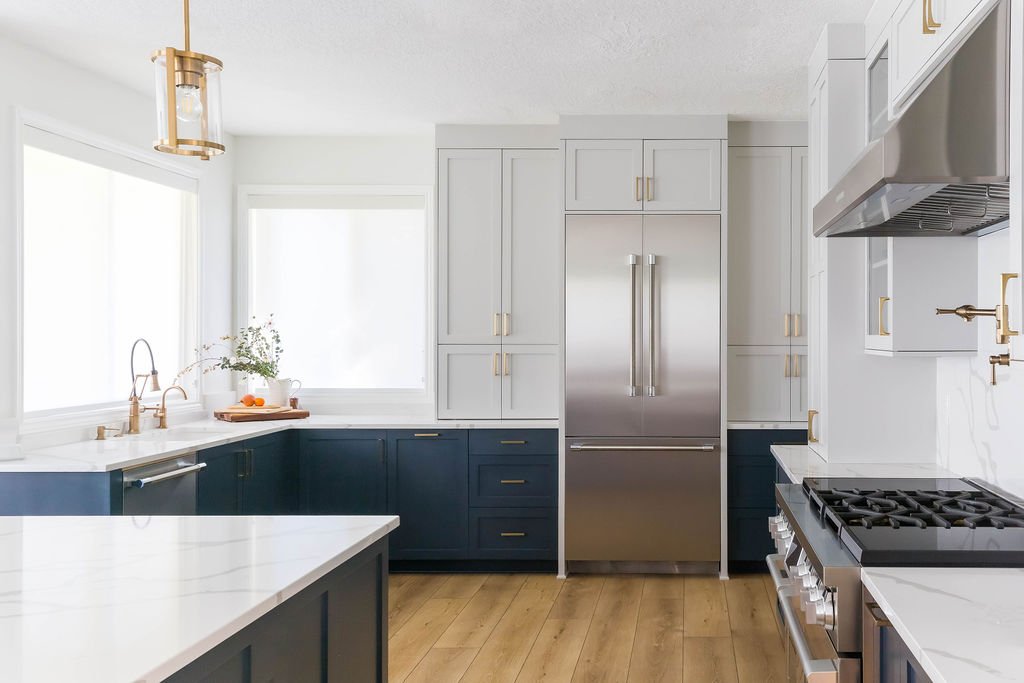
For some kitchens, it’s the hood and backsplash.
For others, it’s the island.
Sometimes it’s statement lighting.
Once you identify the focal point, you build everything else around it.
Why I Start With Countertops
One of the first selections I like to make is countertops.
Here’s why:
It’s easier to find tile that works with a countertop than the other way around
Countertops often act as a visual anchor
Slabs can look completely different in person than in small samples
I always recommend seeing full slabs — especially for natural stone. Veining, movement, and color variation simply can’t be judged from a tiny sample.
And if you find a slab you love? Reserve it.
Slabs sell quickly, and the next one may look nothing like it.
LISTEN ON APPLE PODCAST

LISTEN ON SPOTIFY
Samples Matter More Than You Think
Any time you can get a physical sample — do it.
Bring tile, countertops, flooring, hardware finishes, and paint samples into your home and look at them in your lighting.
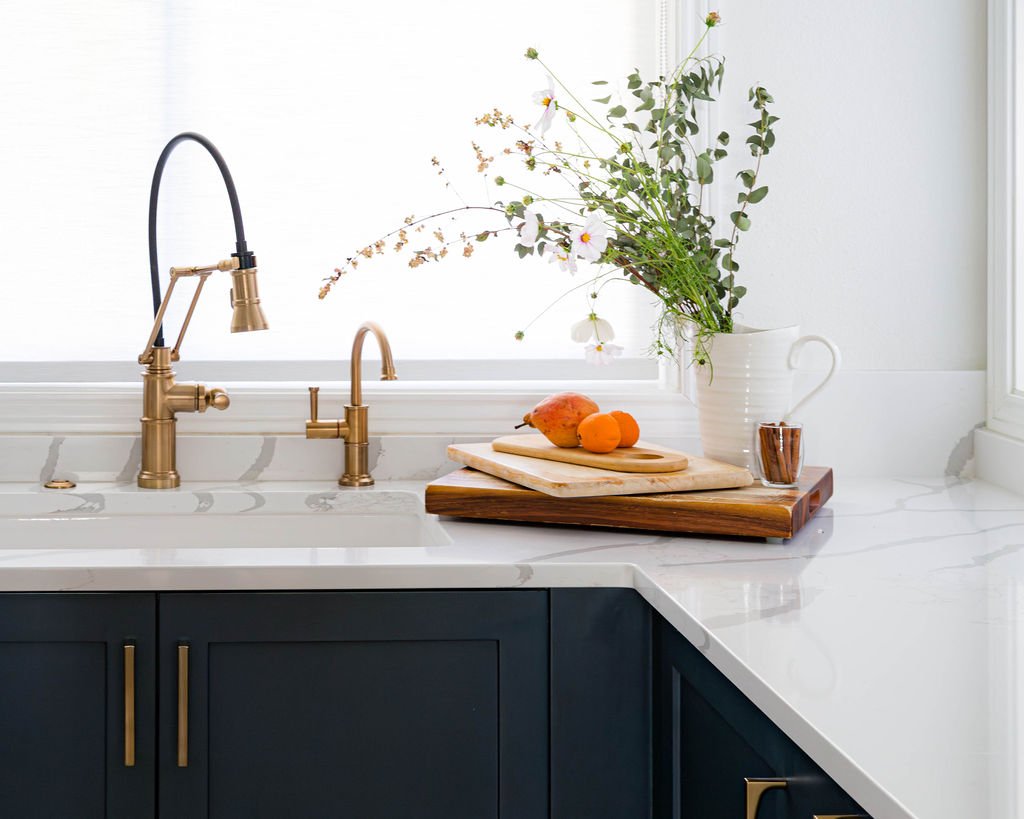
This is especially important with gold finishes. Every brand’s “gold” is different, and if matching matters to you, you’ll need to compare finishes intentionally. Sometimes sticking with the same brand for fixtures is the easiest way to keep things cohesive.
Digital images are helpful — but they don’t tell the full story.
Pull Everything Together Visually
Just like in the Pinterest episode, I recommend pulling all your selections into one place — Canva, PowerPoint, Google Slides.
This lets you:
See how materials interact
Spot issues early
Build confidence in your decisions
When everything works together visually, you walk into demo knowing you’ve made intentional choices — not rushed ones.
Confidence Comes From Process, Not Perfection
The goal of all of this isn’t perfection.
It’s peace of mind.
When you:
Start with function
Anchor yourself with a clear concept
Build selections thoughtfully
You eliminate a huge amount of stress before construction even begins.
That’s exactly what I want for you — a remodel that feels exciting instead of overwhelming.
🎧 Listen to this episode of Preparing for Your Home Remodel to hear the full breakdown and tools I use to guide clients through this exact process.
Next Episode
LISTEN ON APPLE PODCAST
LISTEN ON SPOTIFY